



Most people walk into an appraisal with a number already in their head. It usually comes from a classifieds listing for a car that looks like theirs, or from what a friend got two years ago for something similar. When the offer comes back under that figure, it can feel arbitrary. It almost never is. At Autorama, we’ve been appraising trade-ins across Toronto for over 25 years, and every number we hand back comes from the same short list of inputs.
This guide covers what those inputs actually are, so you can estimate your own car’s value before anyone walks around it with a clipboard. Knowing how the math works also tells you which things are worth fixing before you trade, and which ones you should leave alone.
What Your Car Is Being Valued Against
Your trade-in is not measured against retail listings. It’s measured against what the same year, trim, and mileage is currently moving for at wholesale auction in Ontario, and that number shifts week to week. Every dealer in the province is working from that same baseline, which is why offers from different lots tend to land within a fairly narrow band. The gap between that figure and the retail price on a dealer’s lot covers safety certification, reconditioning, any warranty attached to the sale, advertising, and the weeks the car sits in inventory before someone buys it.
Once you understand that, the private-sale price you see online stops being the right comparison. A private seller is asking retail money and taking on retail work: fielding messages, meeting strangers, arranging the safety certificate, and handling the paperwork themselves.
The Factors That Actually Move Your Number
Mileage Against Year
Appraisers look at your odometer relative to what’s normal for the model year, not the raw number. A five-year-old car with average annual kilometres sits in the middle of the range and holds its value predictably. Go well above that average and your car starts competing with older vehicles that have less wear. Well below average is a genuine advantage, and it’s one of the few things you can’t influence but should absolutely point out.
Accident and Ownership History
This is the single biggest swing factor for most vehicles. A reported collision claim stays on the vehicle history report permanently, and it follows your car into every future transaction, which is exactly why it discounts the value now. The severity matters: a rear bumper claim and a structural repair are not treated the same way. Registration as a rebuilt or salvage vehicle drops the number substantially, and multiple previous owners in a short window raises questions that get priced in.
Condition Inside and Out
Appraisers separate cosmetic wear from mechanical need. Curb rash on the alloys, a stone chip on the hood, and light interior wear are normal for age and barely register. Warning lights on the dash, worn brakes, tires below the wear bars, and anything that would fail a safety inspection get deducted at cost, because we have to fix them before the car can be sold again. Cigarette smoke and pet odour are worth mentioning separately, since they’re expensive to remove and buyers reject cars over them.
Trim, Drivetrain, and Colour
Trim level often separates two identical-looking cars by a meaningful margin. All-wheel drive holds value well in the GTA for obvious reasons, as do heated seats, backup cameras, and factory sunroofs. Neutral colours like white, black, silver, and grey sell fastest here, while bold factory colours narrow the buyer pool and soften the offer slightly. Aftermarket modifications almost always reduce value, even expensive ones, because the next buyer wants the car the way the factory built it.
What the Toronto Market Wants Right Now
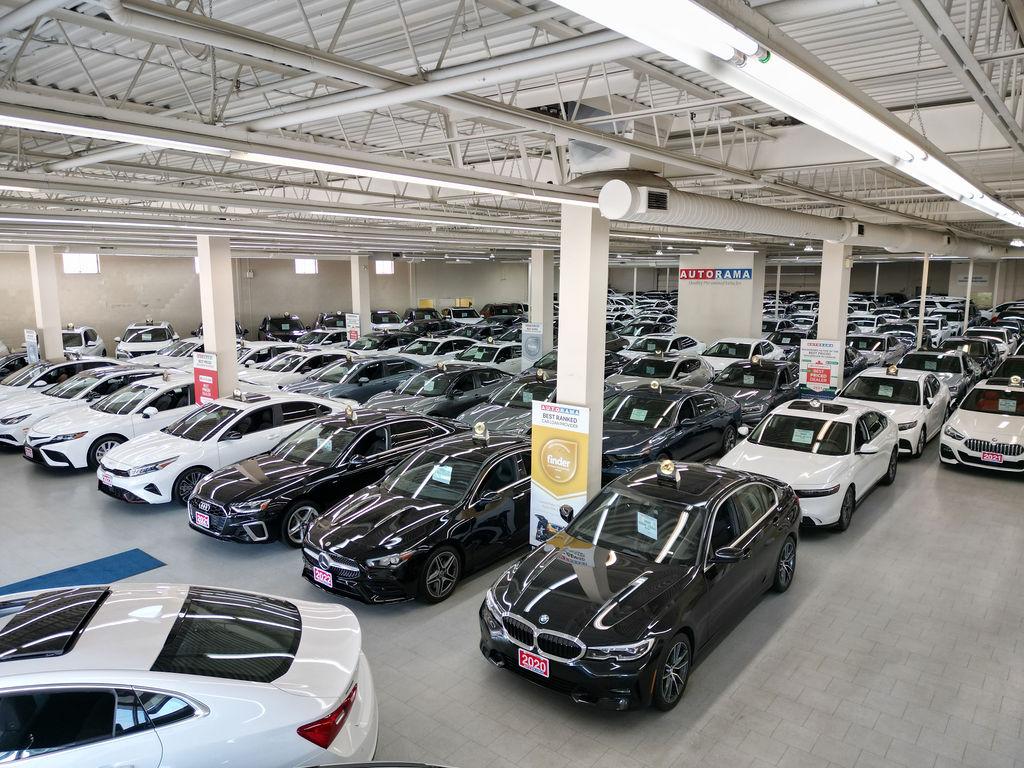
Demand is local and it moves with the season. Compact SUVs and fuel-efficient sedans stay strong year-round in the GTA, and clean, high-demand models sometimes appraise above the wholesale baseline simply because we know we can sell them quickly. Convertibles appraise better in spring than in November. If your car is in short supply on local lots, that works in your favour, and it’s a reasonable thing to ask about directly.
Getting a Realistic Estimate Before You Come In
Start online. Our car trade-in value estimator gives you a working range based on your year, model, trim, mileage, and condition, and it takes a couple of minutes. Treat the result as a starting point rather than a final offer, because no tool can see your tire tread or hear your suspension. Then search current listings for your exact trim and comparable mileage in the GTA, and remember to subtract the retail margin from what you find.
If you want the estimate to hold up in person, be honest in the condition fields. Selecting “excellent” on a car with a repaired fender gets you a higher number online and a longer conversation later.
The HST Advantage on an Ontario Trade-In
Here’s the part that gets overlooked, and it’s worth real money. When you trade a vehicle in at a registered Ontario dealer, HST is charged only on the difference between the price of the car you’re buying and your trade-in allowance. Sell privately instead, and you pay tax on the full purchase price of your next vehicle. At Ontario’s 13% rate, that credit can close most or all of the gap between a private-sale price and a trade-in offer, and it arrives immediately rather than after weeks of listing your car.
Run that calculation before you decide. Take the private-sale price you think you’d realistically get, subtract the extra tax you’d pay, then subtract the cost of the safety certificate and the time involved.
What to Bring to the Appraisal
Show up with the vehicle permit, valid ID matching the ownership, and both sets of keys. A missing second key costs money to replace and comes off the offer. Bring your service records if you have them, since documented maintenance supports the condition you’re claiming. If you have winter tires on rims, bring them or mention them, because they’re worth something to the next owner. If there’s still a loan or lease on the car, bring the lender’s payout statement so we can work with the actual number rather than an estimate.
Why an Offer Sometimes Comes In Low
The usual reasons are accident history you didn’t know was reported, tires and brakes near the end of their life, an active warning light, or negative equity on your current loan. Negative equity isn’t a reflection of your car’s value at all, it just means you owe more than the vehicle is worth, and the shortfall has to be handled somewhere in the deal. Ask for the breakdown if the number surprises you. A straight answer about which deductions applied is fair to expect, and it tells you whether a small repair before trading would pay for itself.
Once you know your number, the rest is straightforward. Browse our used cars for sale with that figure in hand and you’ll be shopping against a real budget instead of a guess, and if the car you’re moving into has a few years on it, it’s worth reading up on a used vehicle warranty before you sign anything. Bring your car by, and we’ll walk through the appraisal with you line by line.
